
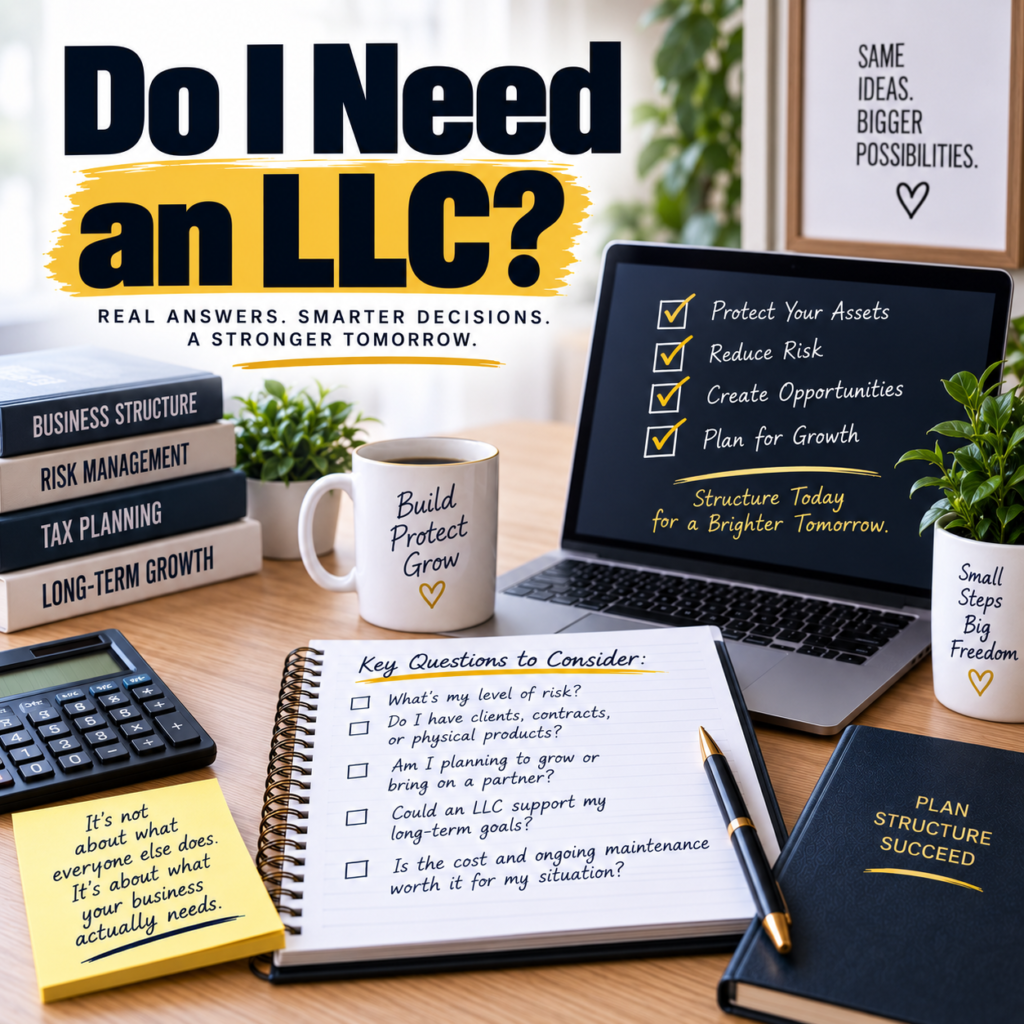
If you’ve been putting off forming an LLC because you’re not sure you actually need one, you’re not behind; you’re being cautious. An LLC isn’t a rite of passage. It’s a tool, and like any tool, it’s only worth using when the job in front of you calls for it.
The real question isn’t “should every business have an LLC?” It’s “what does my business actually need right now?” That depends on the kind of work you do, how much risk sits on your shoulders, and where you’re trying to go financially, not on what a friend, a forum, or a formation website recommended.
Read Also: Why Your Business Tax Structure Matters More Than You Think
What an LLC Actually Does
An LLC, a Limited Liability Company, draws a legal line between you and your business. If the business is sued or can’t pay a debt, that line is designed to keep the claim on the business side of it, away from your house, your savings, and your personal accounts.
It can also open the door to more flexibility in how your business is taxed, depending on the elections you make down the road. That flexibility is real, but it’s an option you unlock, not something that happens automatically the day you file.
What an LLC Doesn’t Do
Here’s the part that surprises a lot of new owners: forming an LLC does not, by itself, lower your taxes. It’s a liability structure, not a tax strategy. If your income and expenses land the same way they always have, your tax bill will too.
Any real tax savings come from a separate election, like choosing S-Corporation status, not from the LLC label itself. If someone sold you on an LLC purely as a tax move, that’s the piece that got left out.
When an LLC Can Be Useful
An LLC tends to earn its keep when:
- Your work carries real liability: Client contracts, physical products, or situations where something could go wrong
- You’re growing and starting to think about bringing on a partner
- You’re approaching the income level where an S-Corp election could meaningfully reduce self-employment tax
In other words, the more exposure and complexity your business carries, the more that legal separation is doing real work for you, not just sitting on paper.
Read Also: Multi-Member LLCs: Here’s What You Must Get Right
When It May Not Be Necessary
If you’re running something small and low-risk, a side project, early-stage freelancing, minimal client exposure, a sole proprietorship can absolutely get the job done. There’s no shame in staying simple. The filing fees, the annual reports, the extra bookkeeping, those are real costs, and they should buy you something real in return.
This isn’t about whether an LLC is required. It rarely is. It’s about whether the structure is actually protecting something or building toward something, or whether it’s just overhead.
Looking Beyond the Formation Stage
Here’s the part that gets missed the most: filing the paperwork isn’t where the protection comes from. An LLC only works as hard as you do to keep it separate: its own bank account, its own records, its own decisions made in its name, not yours.
So instead of asking “Do I need an LLC?” as a yes-or-no box to check, ask: “Does this structure meaningfully support the risk I’m carrying and the direction I’m headed?” That’s the question that actually has an answer worth acting on.
Pro Tip: Already leaning toward yes? Don’t stop at the decision; our Single-Member LLC Playbook walks you through forming it, keeping it in good standing, and knowing when it’s time to revisit the structure, so the protection you’re paying for is one you’re actually getting.
Want to learn more?
Explore the Business Owner Hub
Visit the Business Owner Hub for a guided experience through BizTax Playbook’s free educational resources, calculators, planning strategies, and tools to help you navigate your business journey with confidence.
Join Our Network
Join Our Network to receive educational tips, workflow reminders, tax law updates, deadlines, calculators, and other resources designed to help you make more informed business and tax decisions throughout the year.