
If your bookkeeping is sitting in a pile of receipts, a half-updated spreadsheet, or a “to-do someday” folder, you’re not alone. Most business owners got into business to do the work they love, not to reconcile accounts. So bookkeeping slides to the bottom of the list, usually until tax season forces the issue.
The trouble is that waiting costs more than it seems. Without current books, you’re making decisions based on guesses, and when the numbers are unclear, it’s hard to know how your business is really doing.
Read Also: Tax Pro Meetings: Why Once a Year is Often Not Enough
Why Accurate Books Matter
Your books are the foundation for nearly every financial decision you make. Revenue tracking, expense management, cash flow, budgeting, and tax planning all depend on them.
When transactions are recorded consistently and accounts are reconciled regularly, you can finally see your true profit and financial health, not just what your bank balance suggests.
What Goes Wrong Without Them
The biggest risk is blind spots. You might feel profitable while missing:
- Unpaid invoices that are quietly stalling your cash flow
- Rising expenses that are shrinking your margins
- Upcoming tax bills you haven’t set money aside for
Small errors that go unnoticed in March tend to become big, stressful problems by April of the next year. Poor records also make it harder to spot trends, control spending, and plan for growth.
Read Also: The #1 Reason Profitable Businesses Still Feel Broke
Tax Planning Starts With Reliable Data
Estimated tax payments, deduction reviews, and year-end strategies are only as good as the records behind them. When bookkeeping is late or incomplete, you can miss chances to make smart moves before the year ends, when it’s still possible to act on them.
How to Build a Strong Foundation (Without Overcomplicating It)
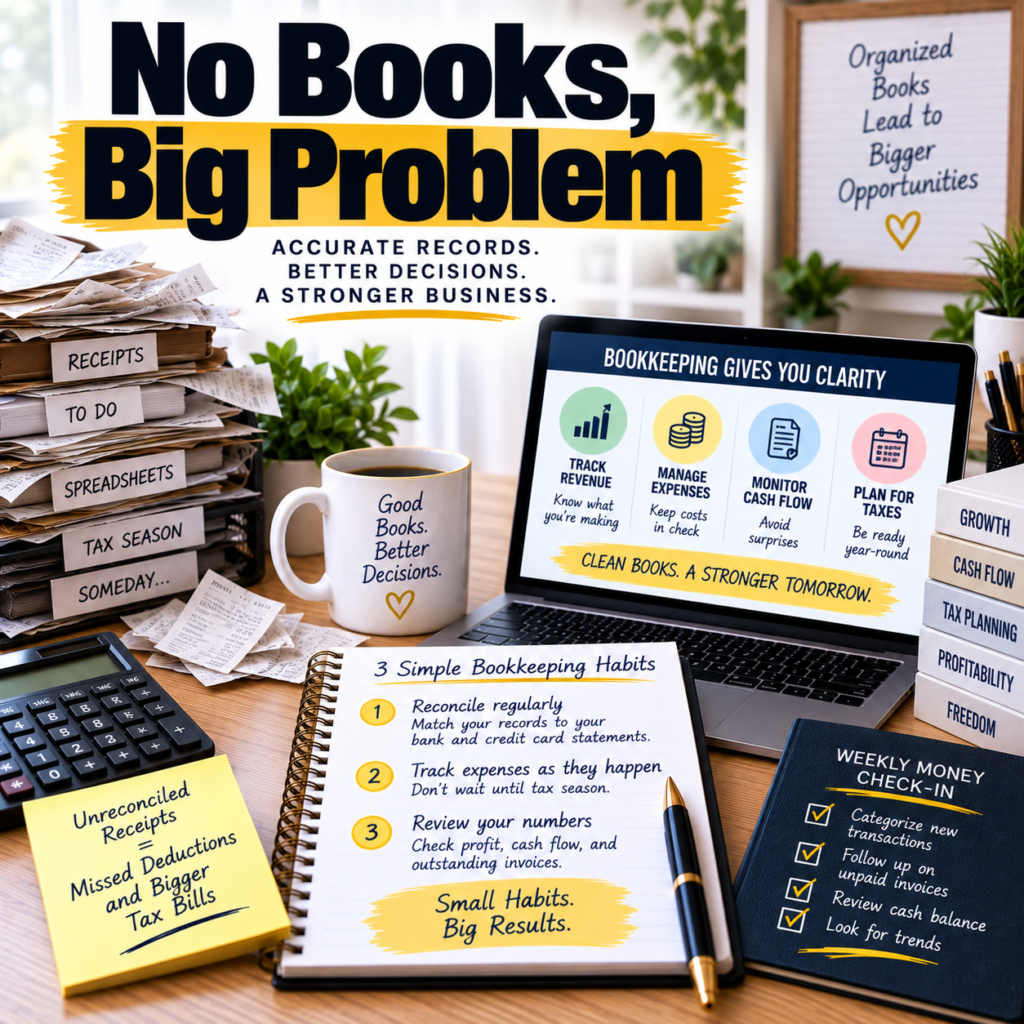
Clean books don’t require a complicated system. They require consistency. Three habits make the biggest difference:
- Reconcile your accounts regularly. Match your records to your bank and credit card statements at least monthly.
- Track expenses as they happen. Don’t wait until you’re digging through a shoebox of receipts.
- Review your numbers routinely. A quick look at profit, cash flow, and outstanding invoices keeps surprises small.
Businesses that make this a year-round habit are better positioned to manage cash flow, prepare for taxes, and make decisions with confidence.
Conclusion
Good bookkeeping is more than a compliance requirement. It’s a tool that supports better decisions in every area of your business. When your records are accurate and up to date, planning gets easier, risks become visible, and growth opportunities are easier to spot.
Pro Tip: Block 30 minutes on the same day every week, such as Friday afternoon, for a “money check-in.” Categorize new transactions, follow up on unpaid invoices, and glance at your cash balance. Small weekly sessions are much easier than a year-end cleanup, and they keep your books ready for whatever comes next.
Want to learn more?
Explore the Business Owner Hub
Visit the Business Owner Hub for a guided experience through BizTax Playbook’s free educational resources, calculators, planning strategies, and tools to help you navigate your business journey with confidence.
Join Our Network
Join Our Network to receive educational tips, workflow reminders, tax law updates, deadlines, calculators, and other resources designed to help you make more informed business and tax decisions throughout the year.